Guilin within a China trip: three to five days well spent
Guilin deserves three to five days in a broader China itinerary. Here's how to structure a short visit or a longer one, and what can safely be skipped.
Worldway Travel · 19 November 2026

How much time Guilin needs
Guilin fits naturally into most China trips as a two-to-five-day stop. Its karst landscape—those distinctive limestone mountains rising from flat ground—justifies the journey from other major cities, and the region offers enough variety that travellers can shape their time to match their interests. Three days provides the essentials; four or five days allows for a more relaxed pace and a choice of secondary destinations.
The long flight from Auckland to mainland China often goes through Shanghai, Beijing or Guangzhou. From any of those hubs, Guilin is a short domestic flight away (usually 2–4 hours). It makes sense either as a standalone destination between two major cities or as a circuit with nearby areas like Yangshuo or Longsheng.
The three-day minimum visit
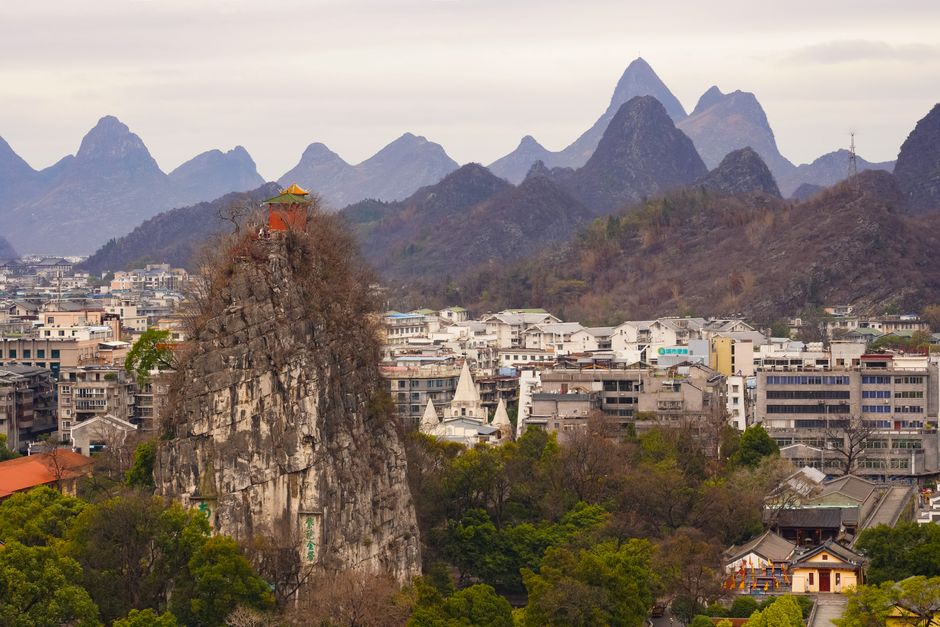
A three-day visit covers the core experience. Day one is arrival and acclimatisation. Land at Guilin Liangjiang International Airport and head to your accommodation in the city centre, which sits on two rivers surrounded by four lakes and distinctive mountains. Spend the afternoon exploring the city itself, particularly the central lakeside areas and the karst peaks dotting the urban landscape.
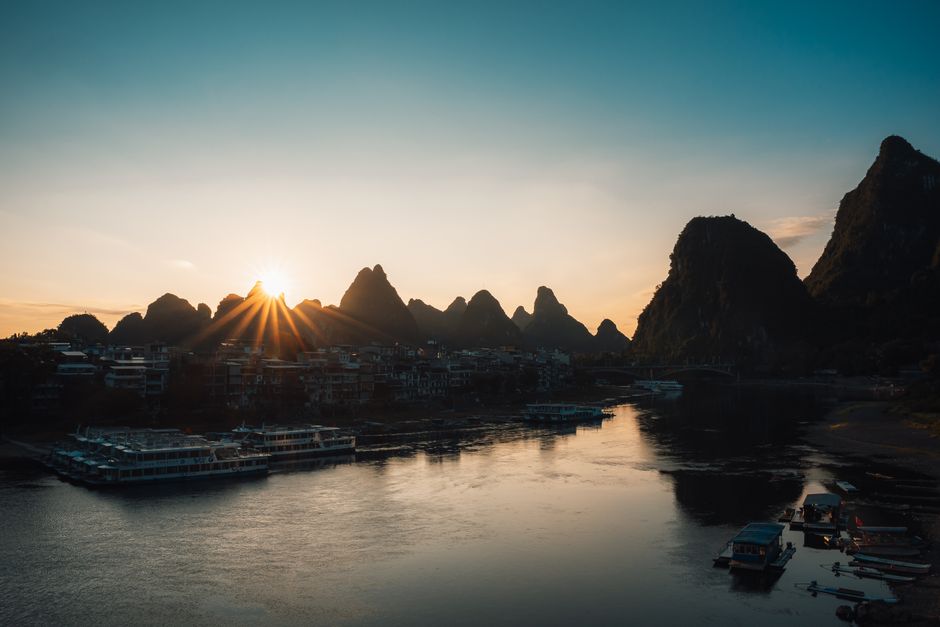
Day two goes to the Lijiang River. This river valley is the most iconic scene in Guilin's landscape and even appears on Chinese currency. A river cruise or bamboo raft trip shows the mountains and rural villages in their setting. The journey typically takes a few hours and includes Yangshuo, a small county town popular with both tourists and local travellers.
Day three offers a choice. Either return to explore more of Guilin city, including any museums or quieter temples missed on day one, or take a day trip to Longsheng, home to the Longji rice terraces. The terraces are among the most photographed agricultural landscapes in China, carved into steep hillsides in concentric patterns. The drive from Guilin takes around two hours each way.
The four-to-five-day option
With four or five days, the itinerary becomes more selective rather than simply longer.
Days one and two follow the three-day plan: arrival, city exploration, and the Lijiang River journey.
Days three and four create a choice. Option A is to base yourself in Yangshuo for a night or two. This town is smaller and quieter than Guilin city, sits on the Lijiang River itself, and offers easy access to hiking, bamboo rafting, and cycling through rural valleys. Many travellers find it a good counterweight to larger cities elsewhere in China. Option B is to dedicate a full day to Longsheng, the rice terraces, and the minority ethnic villages in the upland areas, allowing time to walk among the terraces and visit local villages rather than rushing the experience.
Day five (if available) handles either a return to whichever destination you skipped, or an unhurried final day in Guilin city before departing.
What can be skipped
Guilin has natural attractions that rival anything in China, but some secondary sights matter less than others. Rock climbing in the karst terrain appeals to specialists, not general tourists. Underground caves, though numerous in the region, feel repetitive after one or two visits—if you've seen cave systems elsewhere in China, you can skip them here without missing something unique.
If time is tight, the choice is binary: either the Lijiang River and Yangshuo, or Longsheng. The river valley is the soul of Guilin's appeal and should not be missed. Longsheng is spectacular but more optional; it works best if you enjoy walking, rural villages, and have an interest in how Chinese farmers have engineered landscapes.
Getting to and from Guilin
Guilin Liangjiang International Airport receives domestic flights from all major Chinese cities and some regional international flights. Most travellers from New Zealand will arrive via a connection. Airport buses serve the city centre and Yangshuo, but taxis are reliable and not expensive by global standards.
Three train stations serve Guilin: the central station is most convenient for city travellers, while the north and west stations lie farther out. Trains connect Guilin to Beijing, Shanghai, Xi'an, Chengdu, Guangzhou, and other major hubs, though journey times are long—overnight sleeper trains are common and practical.
Fitting Guilin into a wider itinerary
Guilin works best as a mid-trip break between northern and southern destinations, or as a circuit with nearby provinces. Coming from Xi'an or Beijing, it offers a visual and cultural shift. Pairing it with Yangshuo adds minimal travel time but significantly extends the experience. Those with more time might add Longsheng or venture further into Guangxi's minority-inhabited uplands.
The key is not to rush. Guilin's landscape and rhythm reward a moderate pace. Three days is enough to see the essential sights; four or five days allows the landscape to settle and the region to reveal itself beyond the postcard views.