Guizhou: mountains, minorities and karst scenery in southwest China
Remote and mountainous, Guizhou rewards visitors with dramatic landscapes, ethnic villages and waterfalls. It suits travellers seeking authentic culture beyond China's well-trodden routes.
Worldway Travel · 13 November 2026
What makes Guizhou different
Guizhou lies in China's southwestern corner, a province defined by steep mountains, deep river valleys and dramatic karst rock formations. Unlike the flat plains and ancient capitals that draw many visitors to eastern China, Guizhou remains less visited by international tourists. The landscape is raw and often misty; the culture distinctly multicultural, shaped by Miao, Dong and other minority groups who have lived here for centuries. Travellers used to manicured Chinese attractions will find something rougher and more frontier-like here.
The province's isolation has preserved traditions that have faded elsewhere. Wooden houses with traditional architecture still dominate minority villages. Local festivals, costumes and handicrafts reflect ways of life that have changed little in decades. At the same time, major towns have modern amenities and transport links, so visiting is feasible without enduring genuine hardship.
The landscape and main sights
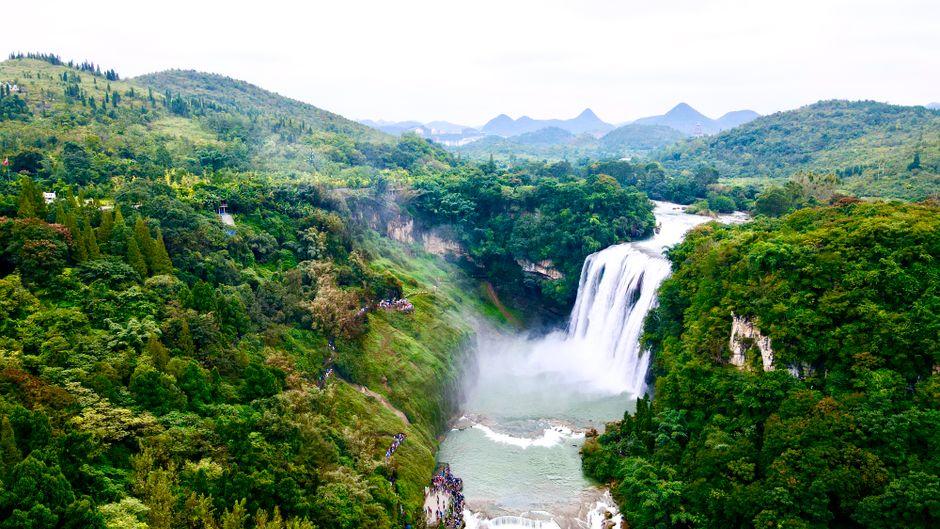
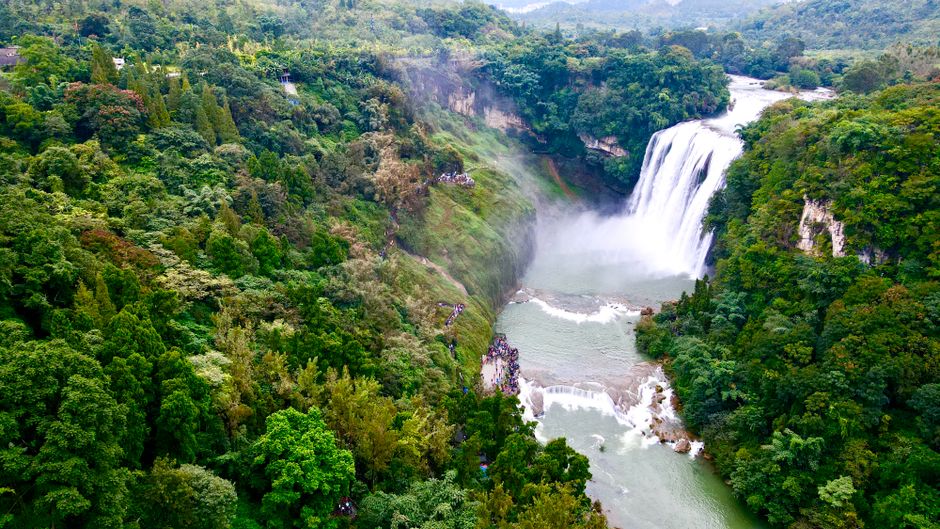
Guizhou's most famous natural attraction is Huangguoshu Waterfall, one of China's largest. Located near the city of Anshun, it plunges 78 metres and stretches 101 metres across. The sight is impressive from multiple angles, and visitors can walk behind the curtain of water.
The province contains extensive karst scenery: limestone terrain carved into peaks, caves, natural bridges and gorges. Libo County, in the southeast, offers several scenic reserves showcasing this geology. The Libo small seven holes features seven natural stone bridges, streams and waterfalls spread across lush forest. Nearby, the Xiaoqikong and Daqikong scenic areas present similarly dramatic terrain surrounded by subtropical vegetation.
For those interested in mountain landscapes and wildlife, Mount Fanjing (Fanjingshan) near Tongren was inscribed on the UNESCO World Heritage List in 2018. The mountain supports unique plant and animal species found nowhere else, and climbing it appeals to visitors seeking both natural beauty and physical challenge.
Minority villages and culture
The draws of Guizhou for many travellers are its ethnic minority settlements. The Miao people are prominent, and several large traditional villages remain accessible and retain genuine character. Xijiang, located in Lei Gongshan national park, is one of China's largest Miao villages. Qianhu Miao Village and Lang De village, south of Kaili, offer similar experiences of traditional wooden architecture, local dress and daily rhythms largely unchanged by tourism. Kaili itself serves as the gateway for exploring Miao areas.
The Dong minority inhabit the southeastern parts of the province. Zhaoxing is the most visited Dong town, sitting in a scenic valley and showcasing Dong architecture, clothing, music and customs. The Dong are known for their wooden buildings, distinctive singing traditions and warm hospitality.
A visit to minority villages can include watching locals at work, attending festivals (timing varies seasonally), eating with families, and learning about handicrafts such as batik dyeing and textile weaving. The experience differs significantly from visiting museum exhibits; these remain lived-in places, though tourism is gradually changing them.
Historic towns and heritage sites
Several towns preserve architecture and atmosphere from the Ming and Qing dynasties. Zhenyuan, in southern Guizhou, sits beside a river surrounded by karst peaks. Its old quarter contains temples, narrow lanes and traditional shophouses. Qingyan, close to Guiyang, is a well-preserved walled town with narrow streets, ancestral halls and stone architecture.
Zunyi holds significance in Communist Party history and attracts Chinese visitors for that reason. The town itself is modern, but it provides a base for understanding 20th-century Chinese political events.
The Hailongtun Tusi Fortress, a castle ruin from an earlier era, is one of three Tusi heritage sites on UNESCO's World Heritage List. These fortresses represent military architecture from periods when local rulers held power before Ming and Qing centralisation.
When to visit and practical matters
Guizhou's climate is warm and humid in summer and cool in winter, making summer the ideal season for travel. The mountains mean weather varies by altitude and location; morning mist is common in valleys. Winter brings cold, though heavy snow is rare.
The province's capital, Guiyang, is the main entry point. An airport handles flights to Shanghai (around two and a half hours) and Hong Kong (one and a half hours), as well as a limited number of international services to Taiwan, Macao and Seoul. Domestic flights connect to other Chinese cities. Within Guizhou, buses link towns, though road conditions and journey times can be unpredictable in mountainous areas. Taxis are available in cities.
English is rarely spoken outside major hotels and tour companies. Mandarin Chinese is understood by most urban residents, though rural areas and smaller towns rely on local dialects. A translation app or phrasebook is useful.
Entry and visa requirements for China change periodically. New Zealand passport holders should verify current rules with the Chinese embassy or immigration authority before travel.
Who should consider Guizhou
Guizhou appeals to travellers seeking authentic cultural experiences and dramatic natural scenery, and who are comfortable with less-developed infrastructure than China's eastern provinces. It suits photography enthusiasts, hikers, and those interested in ethnic minorities and traditional ways of life. It is less suited to visitors wanting comfortable luxury or those with limited time, as distances between sights are large and travel takes longer than in more developed regions. A guided small-group tour can ease logistics and provide cultural context that independent travel might miss.