Nanjing: China's ancient southern capital with 2,500 years of history
Once the seat of six dynasties, Nanjing shaped southern China for centuries. Its museums, imperial tombs and riverside setting make it essential for understanding Chinese history.
Worldway Travel · 12 November 2026
What Nanjing is and why it matters
Nanjing, the capital of Jiangsu Province, is one of China's largest cities with over 8 million people. Its name means "southern capital"—a deliberate pairing with Beijing, the "northern capital." What sets Nanjing apart from other major Chinese cities is its role as one of the Four Great Ancient Capitals, a title earned through more than 2,500 years as a significant city and nearly 500 years as a ruling capital. This long history as a centre of power and culture gives Nanjing a different character from newer industrial cities. For travellers interested in Chinese dynasties and how imperial power shaped the nation, Nanjing offers a concentrated dose of that story.
The dynasties that made Nanjing
Six different dynasties chose Nanjing as their capital, earning it the nickname "Ancient Capital of Six Dynasties." This began in 229 CE when Sun Quan, an Eastern Han ruler, relocated his capital there. The city then became the political and cultural heart of southern China during the subsequent Six Dynasties period, a golden age that left deep cultural marks.
The most significant chapter came during the Ming Dynasty (1368–1644). When Zhu Yuanzhang founded the Ming, he established Nanjing as capital of a unified China—the first time the city held this role over the entire nation. This period created many of Nanjing's most important surviving monuments, including the tomb of the Ming emperor, now a UNESCO World Heritage Site.
The city's more recent history is also significant. In 1912, after the fall of the Qing Dynasty, the Provisional Government of the Republic of China was established in Nanjing, and Sun Yat-sen became provisional president. This makes Nanjing central to modern China's founding story. Between 1927 and 1949, the Nationalist government ruled from here before retreating to Taiwan.
Main sights and experiences
The Ming Tomb stands as Nanjing's most celebrated historical site. Its scale and preservation offer insight into imperial burial practices and Ming-era craftsmanship. The surrounding gardens and approach avenue are considered among China's finest surviving examples of imperial landscape design.
The city's museums hold extensive collections related to its many dynasties. These include ceramics, calligraphy, bronzes and textiles that show how artistic styles evolved across centuries.
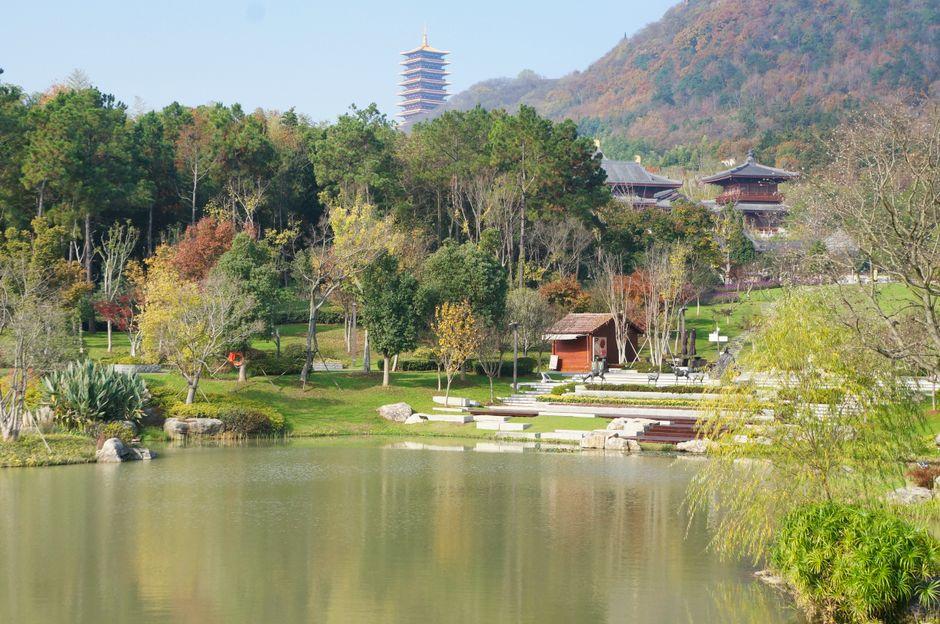
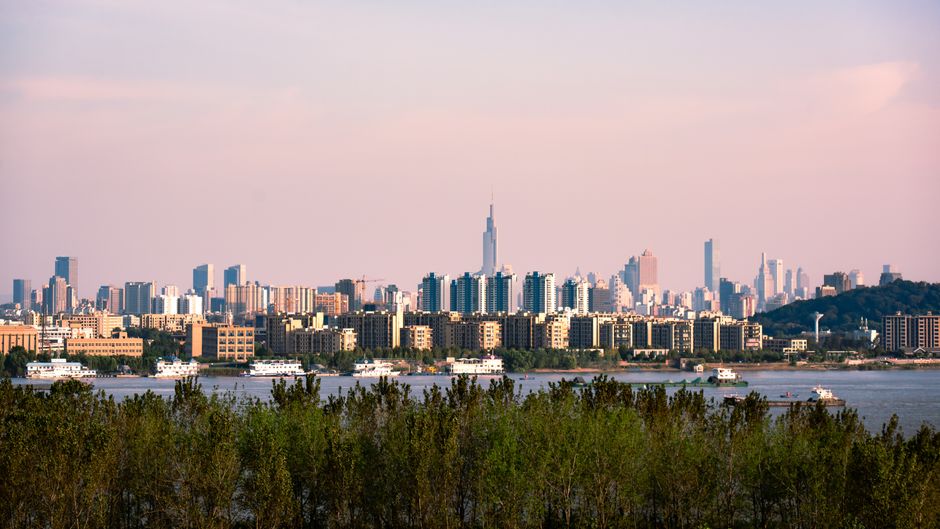
Nanjing's position on the lower Yangtze River shapes its character. The river itself is a major geographical feature, and the city is surrounded by hills to the east, south and north, creating varied scenery beyond the urban core.
Several neighbourhoods and districts preserve older architecture and street layouts, offering a sense of the city's layered past. Walking through these areas reveals how different historical periods left their imprint on the urban landscape.
Climate and seasons
Nanjing has a northern subtropical monsoon climate with distinct seasons and significant temperature swings between winter and summer. Winters are cool but generally not severe, while summers are warm and humid. Spring and autumn offer the most comfortable weather for sightseeing. The seasonal pattern is opposite to New Zealand, so when Kiwis are heading into winter (June–August), Nanjing experiences summer heat.
Getting there
Lukou International Airport, about 35 kilometres from the city centre, connects Nanjing to most major Chinese cities and some international destinations in neighbouring countries and further afield. The airport has a subway connection to the city's South Railway Station, taking about half an hour. Express buses also run from the airport to downtown areas.
For travellers based in Shanghai, the high-speed G train provides an efficient connection. The 75-minute journey makes it straightforward to visit both cities on one trip—a practical option for those flying into Shanghai and wanting to explore multiple destinations.
Nanjing is well integrated into China's rail network, with two major stations serving high-speed trains to destinations across the country. This makes it a logical stop within a broader China itinerary rather than a remote outlier.
Who Nanjing suits
Nanjing appeals most to travellers with a genuine interest in Chinese history and the evolution of dynasties. It rewards visitors who want to move beyond contemporary China and understand the imperial and republican periods that shaped the modern nation. The city's scale and infrastructure make it comfortable for travellers unfamiliar with China, while its depth satisfies those seeking to learn beyond surface-level tourism. For those combining multiple Chinese destinations, Nanjing slots logically between Shanghai and central China, offering a substantial historical experience without requiring extra travel time.