Beijing travel guide: what to see and who it suits
China's capital holds 600 years of imperial history alongside a modern city of 22 million. Here's what first-time visitors need to know.
Worldway Travel · 27 October 2026
What kind of city is Beijing?
Beijing (北京, Běijīng) is China's capital and its second-largest city, home to around 22 million people. It sits on a broad, flat plain in northern China, and its layout reflects centuries of deliberate planning — the city fans outward from the historic centre in a series of rectangular ring roads, a pattern that mirrors the precise geometry of the imperial palace at its heart.
For New Zealanders making their first visit to China, Beijing is often the place that makes the country click into focus. The sheer scale is striking, but so is the coherence: this is a city that has been a seat of power, culture and learning for hundreds of years, and that history is still visible in the streets, parks and monuments.
Locals can seem reserved at first, but warm up quickly. The cultural gap that some visitors find challenging in smaller Chinese cities tends to be less pronounced in Beijing, where sophisticated, internationally aware residents are used to foreign visitors.
Six centuries of history in one city
The name Beijing means "Northern Capital," and the city has lived up to that name for much of Chinese history. The area has been settled for thousands of years, but it rose to real prominence when the Mongol ruler Kublai Khan made it the capital of a united China in the thirteenth century, enlarging the walled city and filling it with palaces and temples.
The most consequential period came under the Ming Dynasty. After a brief interlude when the capital moved south to Nanjing, Emperor Yongle returned it to Beijing in 1403 and gave the city its present name. The Ming era produced the buildings that define Beijing today — the Forbidden City, the Temple of Heaven and much of the surrounding imperial infrastructure. The Qing Dynasty, which followed in 1644, added the Summer Palace and the Old Summer Palace as imperial retreats, and foreign legations established themselves near the Qianmen area south of the Forbidden City.
The twentieth century brought revolution, civil war and eventually the proclamation of the People's Republic in 1949. Beijing hosted the Summer Olympics in 2008 and the Winter Olympics in 2022, making it the only city in the world to have held both. Each of these moments has left a mark on the city's fabric, giving visitors an unusual chance to read modern Chinese history simply by walking around.
The sights that justify the journey
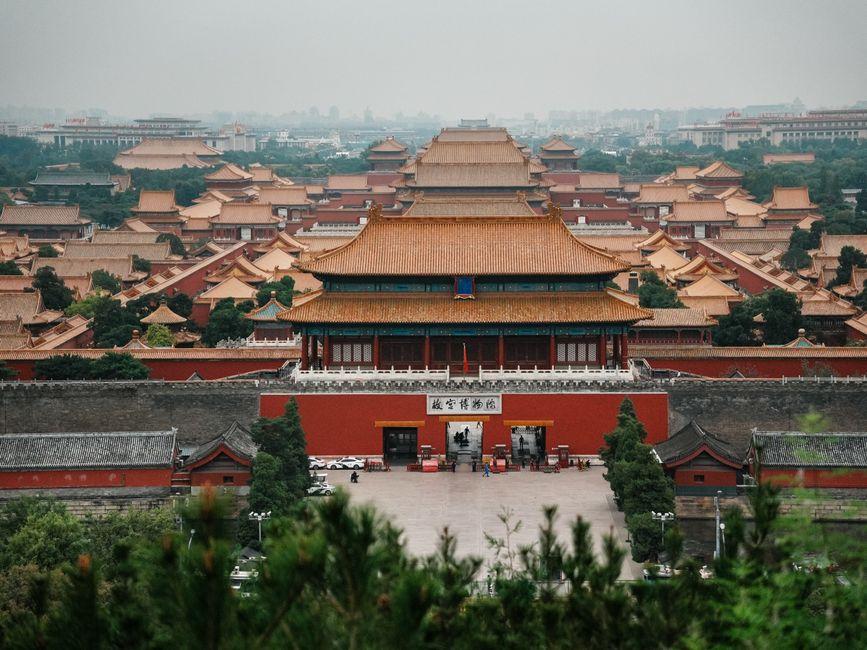
The Forbidden City (故宫, Gùgōng) is the logical starting point. Built during the Ming Dynasty and home to successive emperors until 1911, it is one of the largest palace complexes in the world. A full visit takes most of a day.
Immediately to its south lies Tiananmen Square, one of the world's great public spaces and the symbolic centre of the People's Republic. Just north of the Forbidden City, Jingshan Park sits on three low hills — the only natural rises within the city limits — and offers a rare elevated view across the palace rooftops.
Other key sites worth building a Beijing itinerary around:
- The Temple of Heaven — a Ming-era ritual complex where emperors prayed for good harvests, set in a large, pleasant park
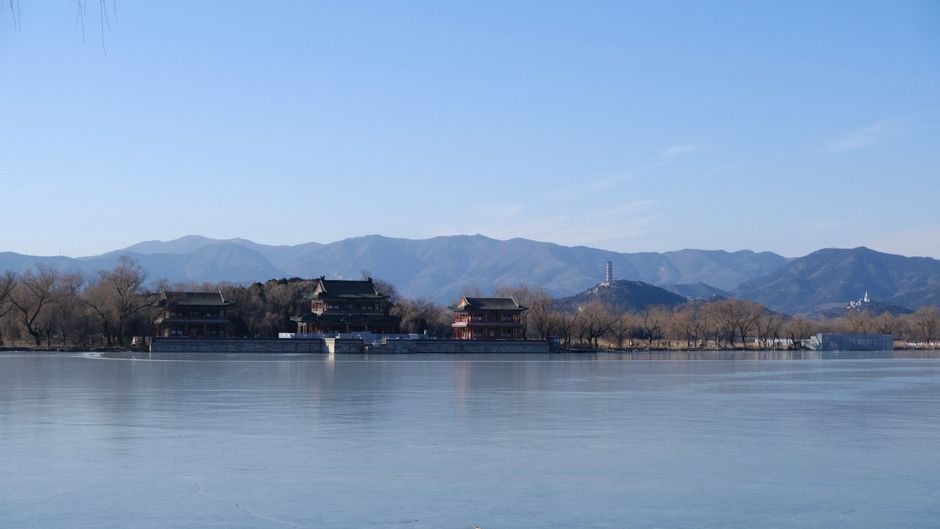
- The Summer Palace — a lakeside imperial garden built by the Qing, about an hour from the centre, ideal for a half-day visit
- The hutongs — the old lane neighbourhoods that survive in pockets between the ring roads, giving a sense of how ordinary Beijingers lived for centuries
- The Great Wall — not within Beijing proper, but several well-known sections are reachable on a day trip from the city
Who Beijing suits best
Beijing works well for a wide range of travellers, but it is particularly well-suited to people who want history to feel tangible rather than just read about it. If you find yourself standing inside the Forbidden City, knowing that the same walls enclosed the Ming and Qing imperial courts for five centuries, the place has a weight to it that photographs cannot prepare you for.
Older travellers and those who prefer not to navigate independently will find Beijing manageable on a guided tour. The main sights are geographically logical, the city has good infrastructure, and the central districts are compact enough to cover methodically without exhausting yourself. That said, distances inside individual attractions can be significant — comfortable footwear matters, and some sights involve a great deal of walking or stair-climbing.
Getting there and when to go
From Auckland, flights to Beijing involve at least one connection, and total travel time is substantial — typically somewhere between twelve and eighteen hours in the air depending on the routing, before counting layovers. Beijing's Capital International Airport and the newer Daxing International Airport both serve international routes.
Seasons matter considerably in Beijing. Spring (April to May) and autumn (September to October) offer the most comfortable conditions — mild temperatures and reasonable air quality. Summers are hot and humid, with occasional heavy rain. Winters are cold and dry, with temperatures well below zero, though the city continues to function and crowds at major sights are thinner. Because New Zealand's seasons run opposite to China's, a New Zealand autumn or spring lines up neatly with good Beijing weather.
Visas and entry requirements
New Zealand passport holders require a visa to enter China in most circumstances, though entry arrangements have been subject to change in recent years. Because visa rules, eligibility and processing times shift, always check the latest requirements directly with the Chinese Embassy in Wellington or via Immigration New Zealand's travel advice before booking.