What to see in China on your first visit
From ancient imperial palaces to karst peaks and sacred mountains, here's how to make sense of China's highlights in two to three weeks.
Worldway Travel · 27 October 2026
Making sense of China's scale
China is enormous — roughly 30 times the size of New Zealand — and deciding what to see on a first visit can feel overwhelming. The practical answer is to pick a region and go deep rather than trying to cross the whole country. Two to three weeks is enough time to experience a genuinely varied journey if you focus on two or three areas that sit close enough together to link comfortably by high-speed train or domestic flight. Think of the country in broad strokes: the historic north centred on Beijing, the karst landscapes of the south, the sacred mountains scattered across the interior, and the old towns of the southwest. A well-planned route can bring two or three of these together without feeling rushed.
One important practical note: tickets to major attractions, including the Forbidden City in Beijing, must be booked online in advance and are linked to your passport number. Carry your passport whenever you plan to visit a sight, because you will need it to collect or verify tickets at the gate.
Historic sites that reward the journey
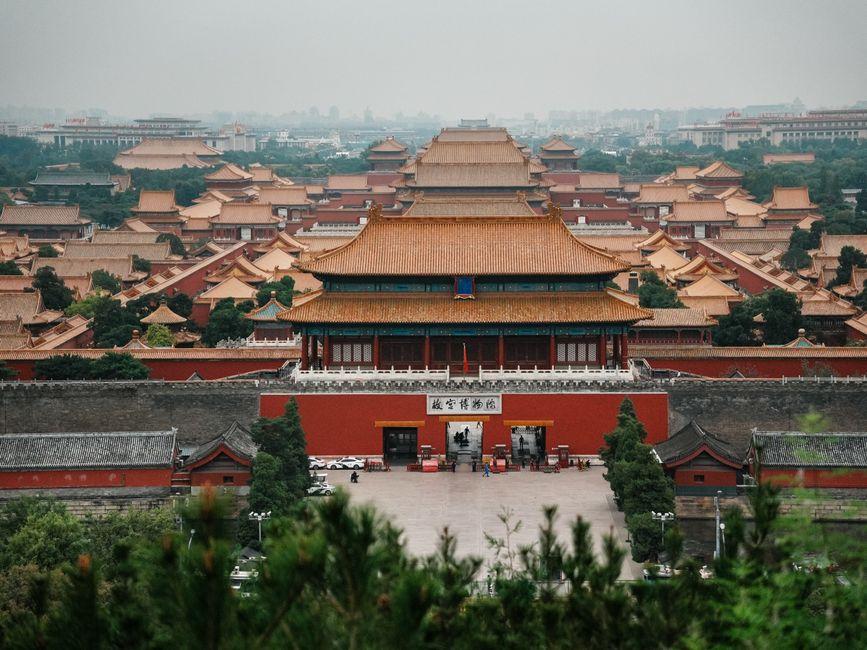
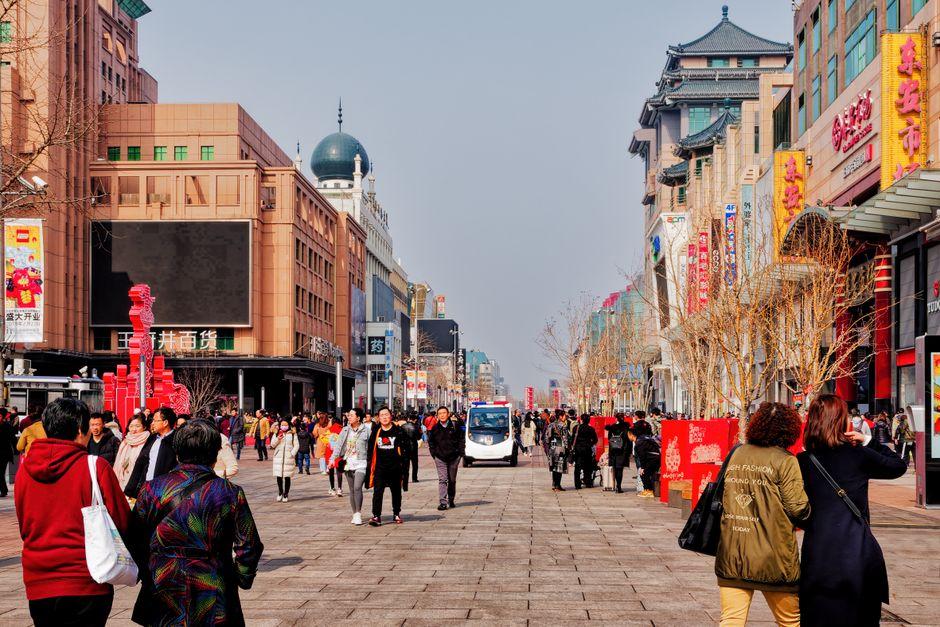
Beijing is the natural starting point for most first-time visitors. The Forbidden City (故宫, Gùgōng) is the former imperial palace at the heart of the city — a vast walled compound of ceremonial halls and courtyards that served as the seat of Chinese emperors for nearly 500 years. Just north of it lies Tiananmen Square, one of the largest public squares in the world. The Great Wall, which runs through the mountains north of the city, is best visited at one of the restored sections within a couple of hours of central Beijing.
China has the third-largest number of UNESCO World Heritage Sites of any country, after Italy and Spain, so historic depth is rarely far away. Xi'an, reached easily by high-speed train from Beijing, is home to the Terracotta Army — thousands of life-sized clay soldiers buried with the first emperor of China around 210 BCE and only discovered in 1974. Further east, Nanjing served as a Chinese capital across several dynasties and holds significant historical sites of its own.
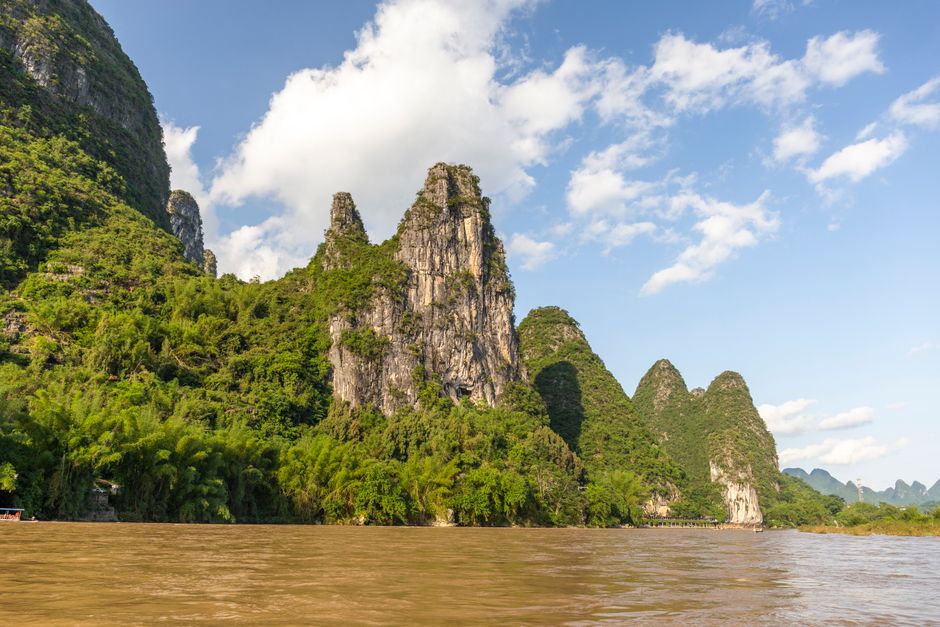
Karst landscapes of the south
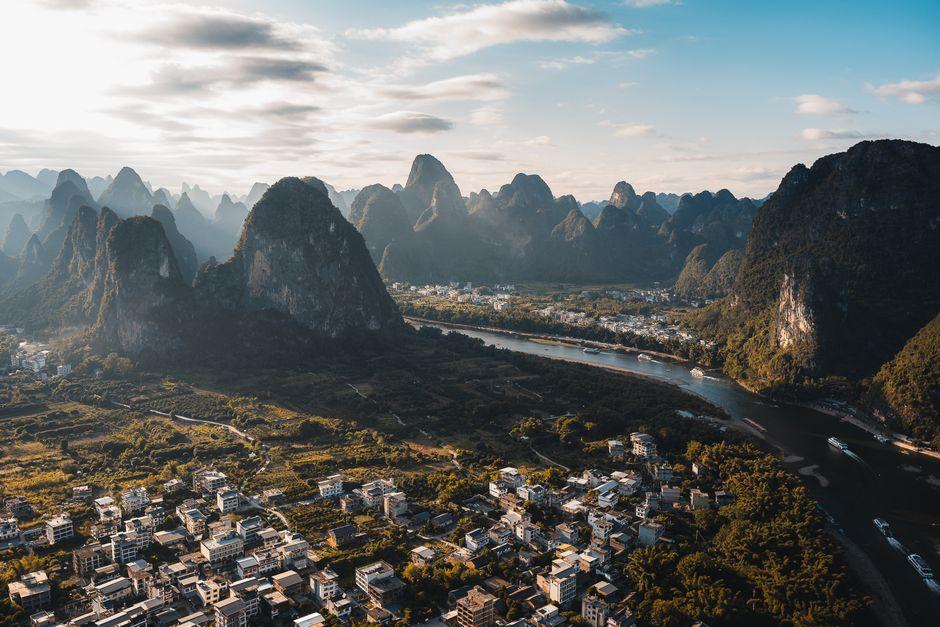
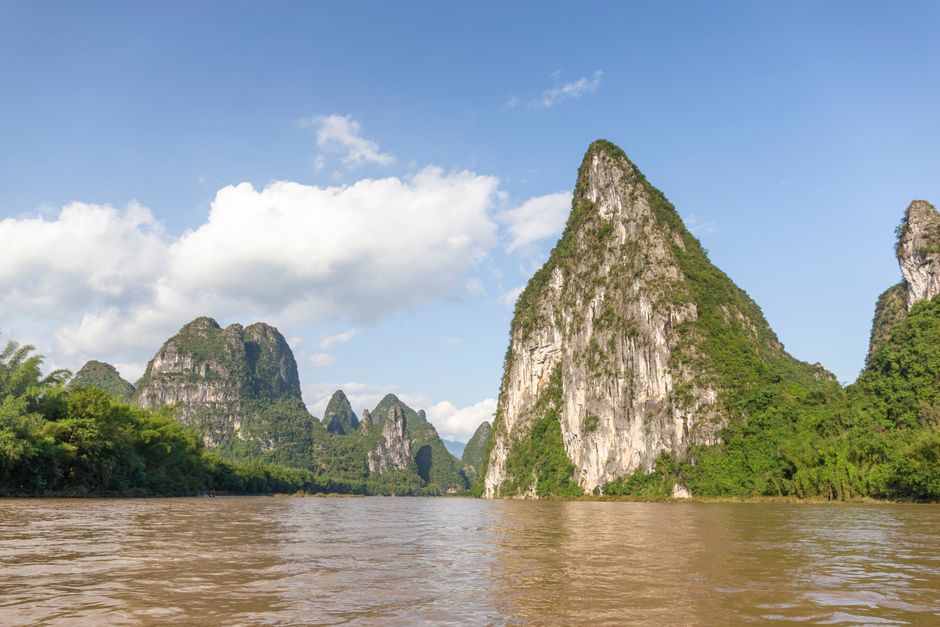
The jagged, forested peaks that appear in classical Chinese paintings are real, and most of them are in the south and southwest of the country. They belong to a geological formation called karst — limestone that has eroded over millions of years into peaks, caves, sinkholes and underground rivers.
The most visited karst region is around Guilin (桂林) and the small town of Yangshuo (阳朔) in Guangxi province. A boat journey along the Li River between the two passes through scenery that genuinely looks like a painted scroll. Yangshuo itself is popular with travellers who want to spend a few extra days cycling through the surrounding countryside.
Further north in Hunan province, Zhangjiajie (张家界) features sandstone pillars rising hundreds of metres from forested valleys — the landscape said to have inspired the floating mountains in the film Avatar. And near Kunming in Yunnan, the Stone Forest (石林, Shílín) is a maze of grey limestone pinnacles worn into extraordinary shapes. Any one of these areas could anchor a leg of your journey; trying to visit all of them in a single trip would mean too many long travel days.
Sacred mountains worth climbing
Mountains carry deep religious meaning in China, and many are still active pilgrimage sites with Buddhist or Taoist temples at their summits. They also tend to be genuinely beautiful, which is why they attract as many domestic tourists as devoted pilgrims.
Among the Five Great Mountains — each associated with a cardinal direction in Chinese cosmology — Mount Tai (泰山) in Shandong province is the most visited. Emperors came here for centuries to perform rituals, and the climb to the summit is lined with stone inscriptions and ancient gates. Mount Hua (华山) in Shaanxi offers a more dramatic experience: steep ridges, chains bolted into rock faces, and paths that test your nerve as much as your legs.
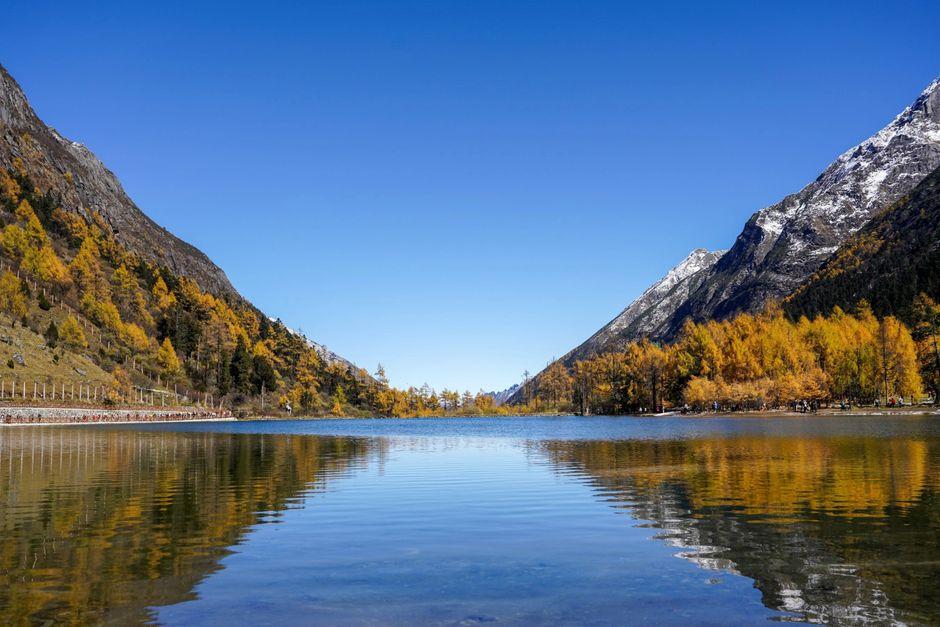
Of the four mountains sacred to Chinese Buddhism, Mount Emei (峨眉山) in Sichuan is probably the most accessible for international travellers and sits close enough to Chengdu to combine with a visit to that city. Mount Wudang (武当山) in Hubei is considered the holiest site in Chinese Taoism and is historically linked to Chinese martial arts traditions.
For most first-time visitors, one sacred mountain is the right number. It adds something quite different to a trip — quieter, more meditative, and a reminder that these landscapes have drawn people for reasons well beyond tourism.
Old towns and the southwest
The Yunnan plateau in China's far southwest rewards travellers who have a few extra days. The provincial capital Kunming connects easily to smaller historic towns such as Dali and Lijiang (丽江), where cobbled streets, canals and traditional architecture have been preserved to varying degrees. Lijiang's old town is a UNESCO World Heritage Site. The minority cultures of Yunnan — the province is home to more than 25 officially recognised ethnic groups — give this part of China a character quite distinct from the north.
Fitting it all into two to three weeks
A practical first itinerary might look like this: begin in Beijing for four or five days covering the Forbidden City, the Great Wall and Tiananmen Square; take the high-speed train to Xi'an for the Terracotta Army and the old city walls; fly south to Guilin for the Li River and Yangshuo; then end in Chengdu, which gives access to both Mount Emei and giant panda breeding centres. This route is geographically logical, keeps internal travel manageable, and covers historic, natural and cultural ground without doubling back.
New Zealand's seasons are reversed from China's, which sits entirely in the northern hemisphere. Spring (March to May) and autumn (September to November) are generally the most comfortable times to travel. Summer brings heat and heavy rain to much of the country, while winter in the north can be bitterly cold. Entry and visa requirements change regularly — always check current rules with Immigration New Zealand and the Chinese Embassy in Wellington before you travel.