Huangshan: granite peaks, mist and mountain walks in Anhui
Jagged granite peaks shrouded in clouds have inspired Chinese artists for centuries. Accessible trails and cable cars make this UNESCO site rewarding for active visitors of most abilities.
Worldway Travel · 3 November 2026
What makes Huangshan special
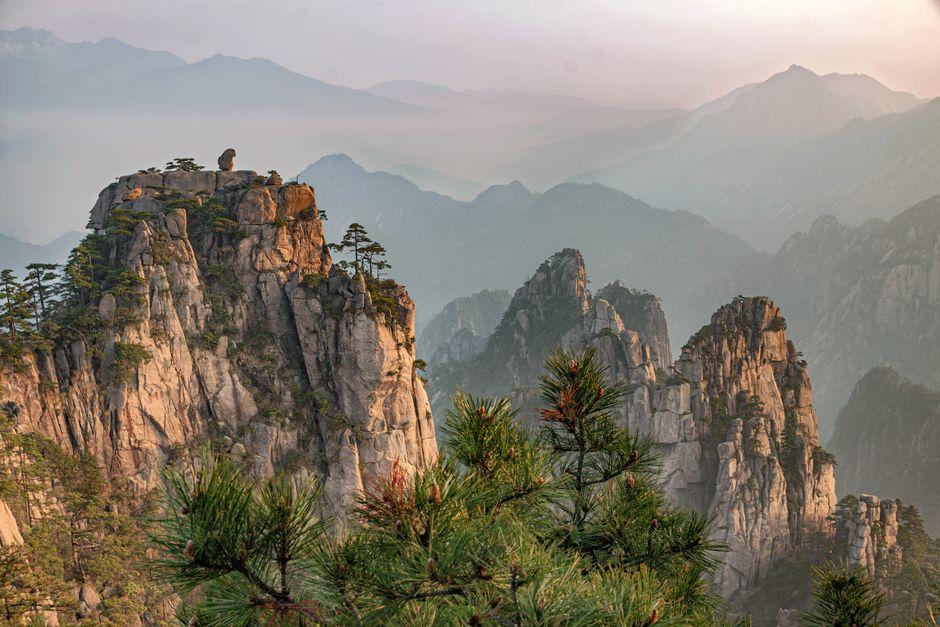
Huangshan, or Yellow Mountain, rises in Anhui Province in eastern China as a UNESCO World Heritage site of genuine distinction. The massif consists of 36 granite peaks, most higher than 1,800 metres, that have captivated Chinese painters and garden designers for generations. Unlike many celebrated mountains, Huangshan offers a combination of dramatic scenery and practical accessibility: the peaks remain steep and jagged, yet a network of walking trails and cable cars allows visitors of varying fitness levels to experience the landscape properly.
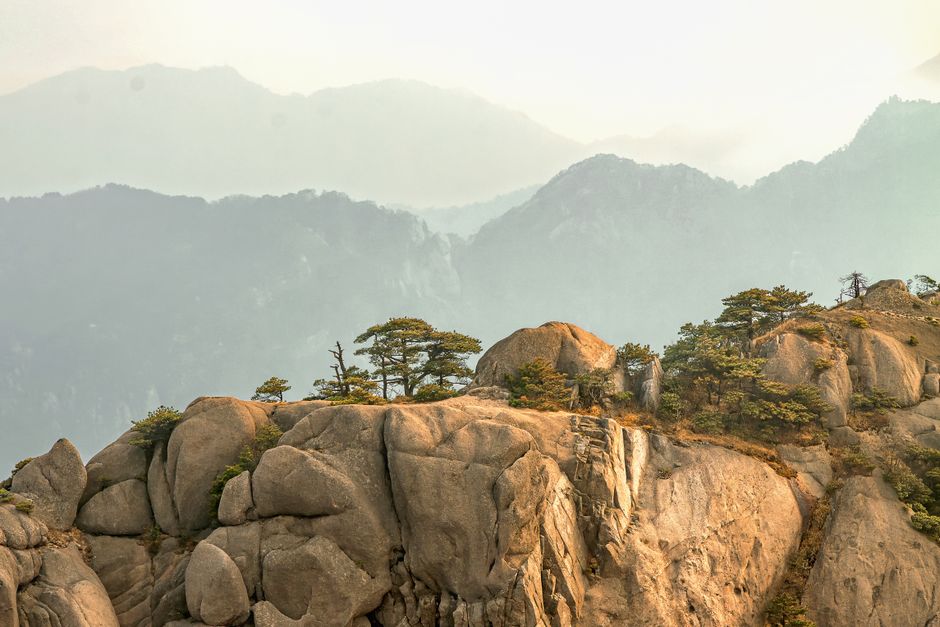
The mountain's fame rests on its visual drama. Granite slopes support uniquely shaped pine trees that cling to near-vertical rock faces—the most iconic is the local Pinus huangshanensis. Individual trees have been named and celebrated for centuries, such as the Welcoming Guest Pine. The peaks themselves carry poetic names reflecting their forms: Lotus Flower Peak, Celestial Capital, Paint Brush. Over 1,450 plant species flourish on the mountain, along with macaques, squirrels and other wildlife that make brief appearances as you walk.
The defining characteristic, however, is mist. More than 200 days each year, clouds obscure the upper reaches entirely. When conditions align—partial cloud cover creating a "sea of clouds" in the valleys below—the mountain becomes utterly striking. This unpredictability is not a weakness but part of the experience: the landscape shifts constantly, revealing and concealing peaks, creating views that shift within minutes.
When to visit and what to expect
Huangshan suits active visitors aged 50 and over who enjoy mountain walking. The terrain is steep but the trails are well-maintained and marked. Cable cars reduce the ascent significantly if needed; the two main options serve the Hot Springs Area and the Yuping Cable Car or Xinyungu (New Cloud Valley) Cable Car from the foot of the mountain. Food and supplies cost roughly twice as much at the summit as at base level, so budget accordingly and consider what you'll need to carry.
The mountain is cold at night despite its southerly location. Winter temperatures can drop below freezing at the summit, and ice forms on paths in winter mornings, though the most difficult routes close in hazardous conditions. Spring and autumn offer the best balance of reasonable temperatures and clearer skies, though neither guarantees cloud-free views. Because visibility is so variable, flexibility helps: if you can stay for several days rather than one, you'll increase the odds of experiencing the mountain at its finest. Checking the weather forecast before you travel and being willing to adjust dates can make a real difference to what you see.
Getting there from Auckland
From Auckland, most routes to Huangshan involve at least one stop. Flying to Shanghai and then taking a short onward flight to Tunxi Airport (about one hour) is straightforward. Alternatively, the overnight train from Shanghai to Huangshan station in Tunxi town takes roughly 11 hours but saves a hotel night; it arrives around 7:00 am, leaving the day free for the mountain. High-speed rail connections link Huangshan North station (opened in 2015) to Beijing, Shanghai and other major cities, though this station sits some distance from the mountain itself.
From any arrival point, you'll travel to Tangkou, the tourist distribution centre at the mountain's base. This journey takes around one to two hours depending on your starting point. Shuttle buses run frequently from Tangkou to the cable car bases every 20 minutes. Allow yourself travel time on arrival day; rushing straight to the summit risks arriving tired and disappointed if cloud obscures the view.
On the mountain
The walking tracks crisscross the granite plateaus between peaks, offering choice in route and difficulty. Cable cars and shuttle buses mean you don't need to climb the entire mountain on foot unless you prefer to. Many visitors choose a mixed approach: taking a cable car up one side and walking down the other, or walking some sections and riding others based on fitness and time.
Pack layers and waterproof clothing even on clear-looking days. Mist can roll in quickly, temperatures drop noticeably, and paths become slippery. In winter, vendors at the mountain sell slip-on snow spikes for shoes if ice forms overnight. Bring sufficient water and snacks; the mountain canteens are expensive and limited in choice.
The views justify the effort and cost. Watching sunrise or sunset from a summit, with cloud formations shifting beneath your feet and granite peaks rising around you, explains why this mountain has held a central place in Chinese art and culture. It is not a gentle landscape to admire from afar, but one you walk through, step by step, at your own pace.