Jiuzhai Valley: alpine lakes, waterfalls and mountain scenery in Sichuan
Jiuzhai Valley in northern Sichuan is known for its turquoise lakes, multi-level waterfalls and remote mountain landscapes. It sits in a region long inhabited by Tibetan peoples.
Worldway Travel · 5 November 2026
What Jiuzhai Valley offers
Jiuzhai Valley lies in the mountains of northern Sichuan province, about 350 kilometres north of Chengdu. The name means "Valley of Nine Villages", referring to the Tibetan settlements scattered through the region; seven of these villages remain inhabited today. The valley itself stretches 80 kilometres through three main valleys in the Min Shan mountains, with hiking trails and viewing areas between 2,000 and 3,100 metres elevation.
The valley became a national park in 1982 and opened to tourists two years later. UNESCO recognised it as a World Heritage Site in 1992, and it also holds status as a World Biosphere Reserve. A major earthquake in 2017 forced a two-year closure, but the park reopened in late 2019.
The landscape and lakes
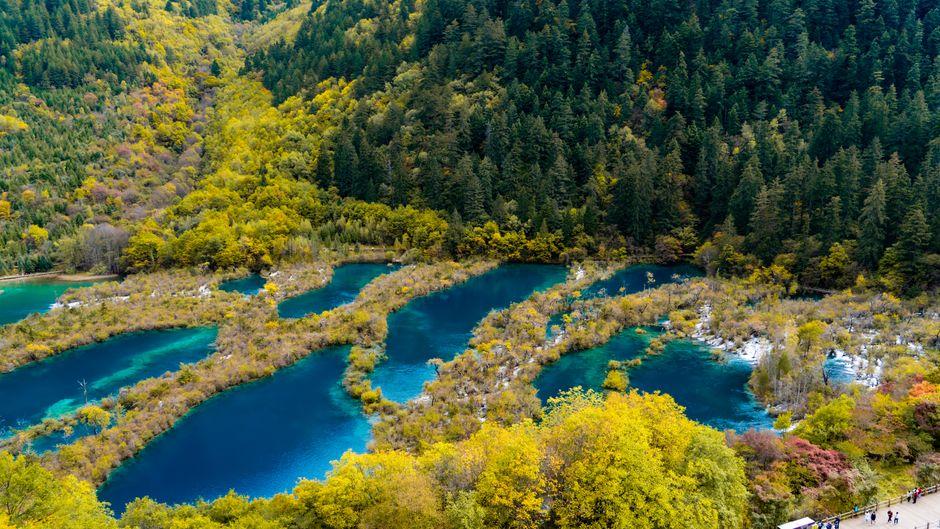
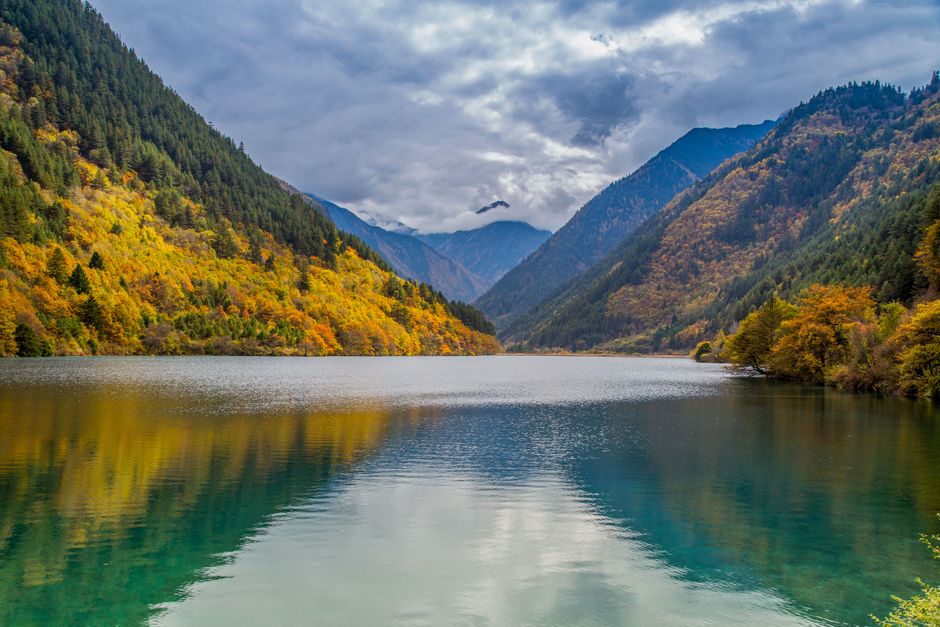
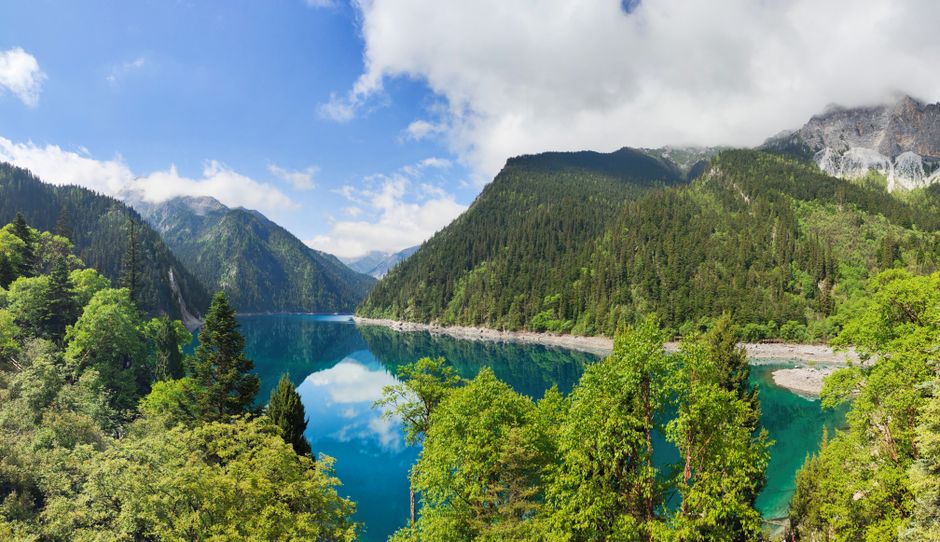
The most striking feature of Jiuzhai Valley is its system of dozens of alpine lakes, most of them turquoise, blue or emerald in colour. These lakes formed over thousands of years through a process involving glacial activity and calcium carbonate deposits. Snowmelt flows into the valley carrying calcium carbonate, which accumulates in natural dams and gradually thickens, eventually creating the travertine ledges and clear lake waters seen today. The high mineral content means the water is exceptionally transparent; you can often see the lake bottom even at considerable depth.
The lakes vary in colour depending on their depth, the surrounding rock and vegetation, and the minerals they contain. This natural variation creates the distinctive appearance Jiuzhai Valley is known for. Complementing the lakes are multiple waterfalls and cascades that tumble down the hillsides in stages. Together, the water features and forested mountainsides create the dramatic landscape for which the valley is famous.
Seasons and weather
The valley experiences pleasant weather year-round, with no harsh winters and cool summers. Each season brings different attractions. Autumn, particularly from mid-October to the end of October, is considered the most colourful period when the forests turn shades of gold, orange and red. Winter brings snow to the upper elevations and ice formations on the waterfalls, creating a striking contrast with the turquoise lakes. Spring and summer offer green hillsides and wildflowers, though summer can see higher numbers of visitors.
Geology and setting
Jiuzhai Valley sits at the edge of the Tibetan Plateau, on a major fault line where the Tibetan Plateau and the Yangtze Plate meet. The landscape has been shaped by glacial action, water flow, tectonic activity and earthquakes over millions of years. The rock is primarily carbonate-based, including dolomite and tufa, which has been crucial in creating both the distinctive lakes and the travertine formations visible throughout the valley.
The valley forms part of the catchment area for the Jialing River, which flows into the Yangtze River system. The broader Sichuan scenic area contains significant environmental and ecological value, with the valley itself recognised as one of China's top scenic destinations.
Wildlife and environment
The valley is home to two of China's most endangered species: the giant panda and the Sichuan golden snub-nosed monkey. However, encounters with these animals are rare given the size of the park and the volume of visitors. Other fauna and flora typical of high-altitude mountain environments inhabit the forests and valleys.
Balancing environmental protection with tourism has become an ongoing challenge for park management. The area's designation as both a World Heritage Site and Biosphere Reserve reflects its significance for conservation, though mass tourism remains a major activity.
Who should visit
Jiuzhai Valley suits travellers who enjoy mountain scenery, hiking and natural landscapes. The elevation means a reasonable level of fitness helps, though not all viewing areas require strenuous walking. The remote location and the Tibetan cultural elements add appeal for those interested in ethnic minority regions and authentic mountain communities. Visitors from New Zealand should be prepared for the long flight to Chengdu and the subsequent transfer to the valley, and should check current entry and visa requirements well before travel.