Mount Emei: Buddhism, temples and steep mountain walks in Sichuan
This sacred Buddhist mountain in southern Sichuan rises to 3099 metres and holds over 100 temples. Steep hiking, cable cars and monastery visits suit various fitness levels.
Worldway Travel · 6 November 2026
Why Mount Emei matters
Mount Emei (峨眉山) is one of China's four sacred Buddhist mountains, a status it has held since Buddhism arrived in the country. The mountain stands 3099 metres above sea level in southern Sichuan Province, about 150 kilometres south of Chengdu, and it represents 'Great Practice' and 'Great Virtue' in Buddhist tradition. Over more than a thousand years, pilgrims and monks built more than a hundred temples and monasteries on its slopes. The site earned UNESCO World Heritage status in recognition of its spiritual and cultural importance. For many visitors, Mount Emei combines physical challenge with spiritual atmosphere—a chance to walk among working monasteries and see how Buddhism has shaped a landscape.
What to expect on the mountain
The experience differs significantly from pristine wilderness. Roads and accommodation dot the mountainside, and the summit area and main trails draw large crowds, especially during Chinese school holidays and weekends. The hiking paths themselves are well maintained and paved with steps in most sections, but they are extremely steep. The mountain sits in cloud cover for more than 330 days per year, which means visibility can drop quickly after sunset and the upper reaches receive snow from December through mid-spring. Travellers should budget three days to see the whole mountain comfortably; reaching the summit in a single day from the base is not realistic for someone without serious mountain experience.
The two main routes start from Niuxin Pavilion. The western path takes a fit person 10 to 12 hours of hiking to reach the Golden Summit. However, cable cars and buses reduce the distance considerably. A cable car runs from Wannian Station up the mountain, and buses travel near the summit at Leidongping. Even using these shortcuts, the climb between the two cable car stations involves around 1500 metres of elevation gain over 6 to 8 hours. First-time visitors often start by taking a bus or cable car partway, then hiking the rest of the way.
Main sights
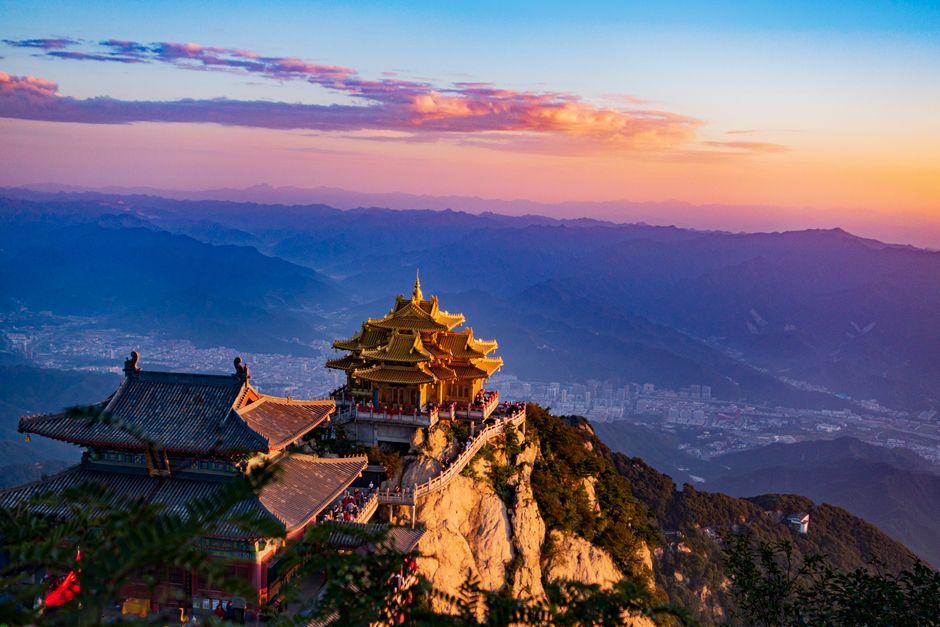
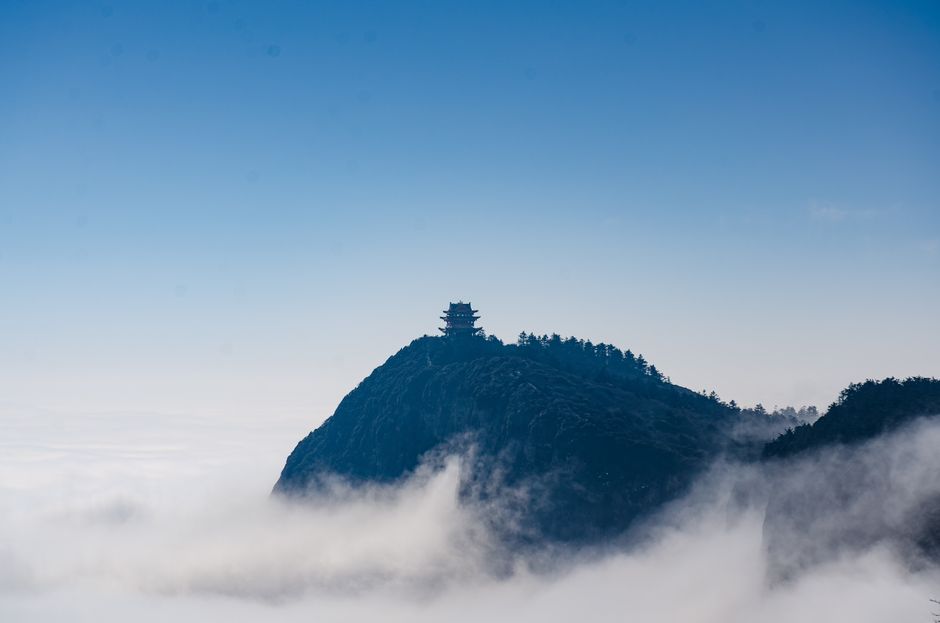
The Golden Summit (金顶), the highest point, features a striking multi-faced statue of Samantabhadra and views across the cloud sea surrounding the peak—a reward after the steep ascent. Wannian Monastery (万年寺) houses a magnificent statue of the same bodhisattva seated on a white elephant with six tusks; the monks here contribute substantially to the spiritual atmosphere. Huazang Temple (华藏寺) sits near the summit and offers a fine viewing terrace. Leiyin Monastery (雷音寺) and several smaller temples tucked into the mountainside provide quieter, off-trail exploration. Many are recent constructions, but they remain important to the spiritual rhythm of the mountain.
The lower third of the mountain, between Baoguo Temple (the traditional entry point) and Niuxin Pavilion, contains many interesting, less crowded sites. Visitors are free to walk any paved footpath and enter the monasteries.
Getting there and moving around
Mount Emei lies about 130 kilometres from Chengdu's international airport. Frequent buses run from Chengdu's Xinnanmen Bus Station throughout the day, taking roughly three hours. High-speed trains connect Chengdu to Emeishan via Leshan in about an hour. From Emeishan City or the town of Baoguo, local buses reach Baoguo Station and Temple, the main entry point.
Entrance to the national park requires a ticket valid for two days. Once inside, buses connect the major access points: Baoguo Temple, Wuxiangang Park, and Wannian Cable Car Station. Return bus tickets to near the summit cost a moderate amount. Two cable cars operate on the mountain—one from Wannian Station to Wannian Temple, and another from Jieyin Temple to the Golden Summit. Sedan chairs carried by people are available on specific sections of trail at fixed rates, though this is an expensive option. Local taxi services and ride-hailing apps like Didi provide transport from town to the mountain access points.
Practical considerations
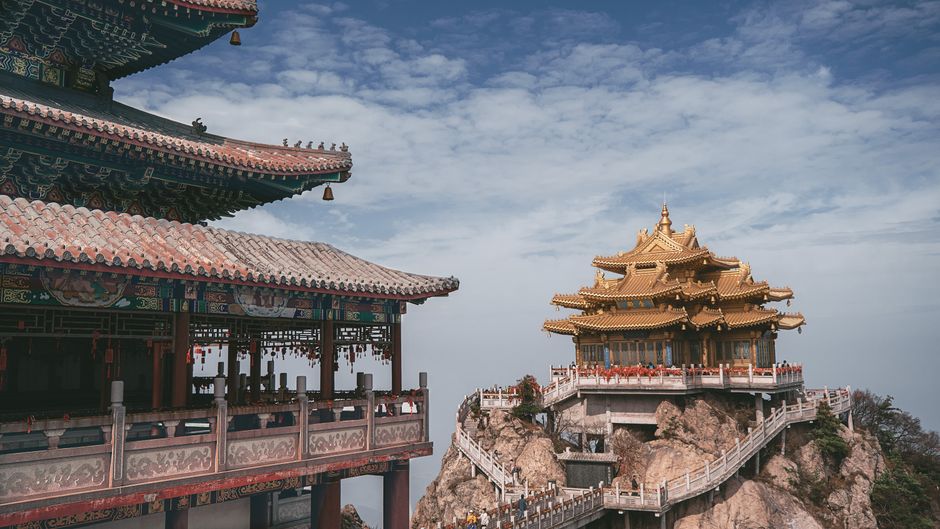
Hikers should bring sturdy footwear and be prepared for very steep sections. Snow and ice coat the upper mountain from December through mid-spring; a bamboo hiking pole costs very little, and crampons help on icy sections. Winter coats are available to rent at Leidongping Bus Station. Distances marked on signposts underestimate actual hiking time; plan accordingly and ensure you reach accommodation before dark, as cloud cover makes evening navigation difficult.
Maps are sold locally but prioritise artistic design over accuracy. Reasonably fit travellers can complete major routes, but the mountain suits a range of abilities because cable cars and buses allow flexible pacing. The mountain's sacred atmosphere and working monasteries make it distinct from purely scenic peaks elsewhere in China. It rewards both dedicated hikers and those who prefer a gentler pace with cable cars and shorter walks.