Regional food of China: a guide for New Zealand travellers
China has dozens of distinct regional cuisines. Here is what to expect at the table, from Cantonese dim sum to Sichuan spice.
Worldway Travel · 27 October 2026
Why "Chinese food" means something different here
Most New Zealanders have grown up with a version of Chinese food shaped largely by Cantonese immigrants. Arriving in China, many people are surprised to discover that a local from Chengdu and a local from Shanghai may find each other's cooking almost unrecognisably foreign. Climate, geography and centuries of separate culinary tradition have produced a country where the food changes dramatically every few hundred kilometres. Thinking of it as one cuisine is a bit like lumping French, Spanish and Polish cooking together as "European food."
That diversity is one of the genuine pleasures of travelling in China. The sections below cover the four cuisines you are most likely to encounter, a few others worth knowing about, and some practical matters around dining customs and dietary needs.
The four cuisines you will encounter most
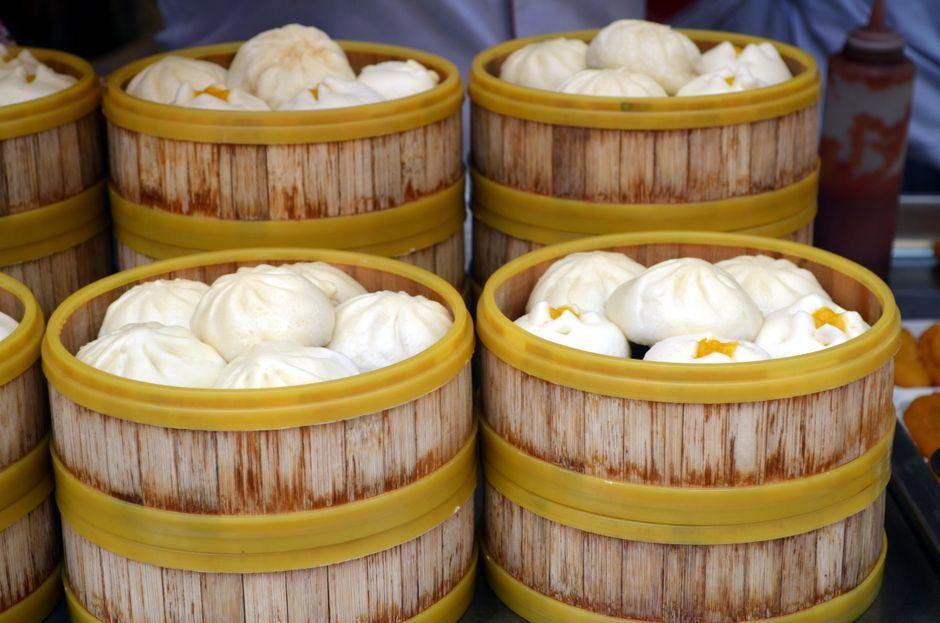
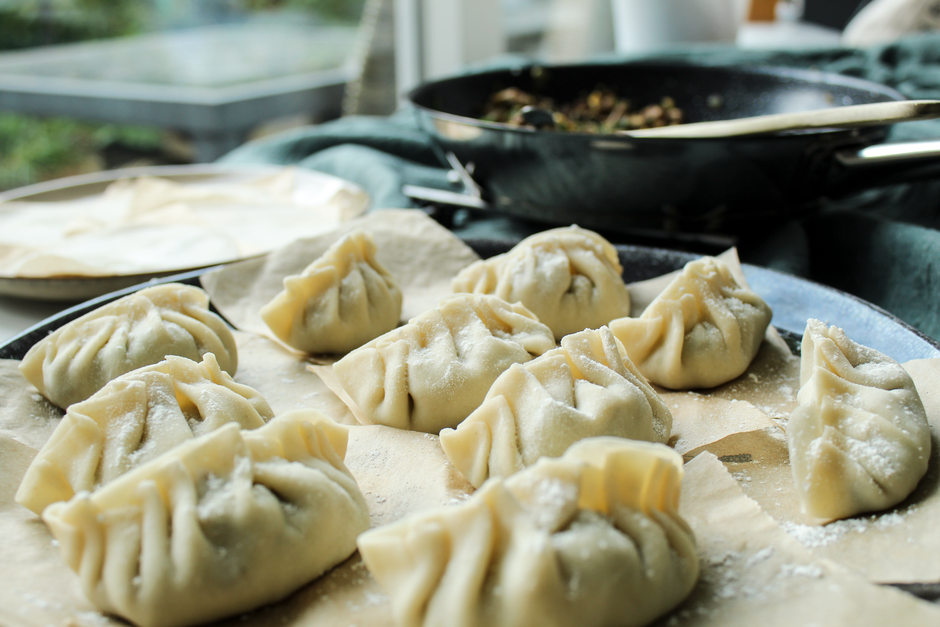
Cantonese cuisine (广东菜, from Guangdong province and Hong Kong) is already the most familiar to New Zealanders. It favours freshness above all else: ingredients are lightly stir-fried in a very hot wok or gently steamed so that their natural flavour comes through. It is neither bland nor particularly spicy. Dim sum — small steamed or fried dishes served in bamboo baskets — is its most social form, traditionally eaten at breakfast or brunch. Other Cantonese staples include roast meats such as crispy-skin pork and char siu, wonton noodle soup, and claypot rice.
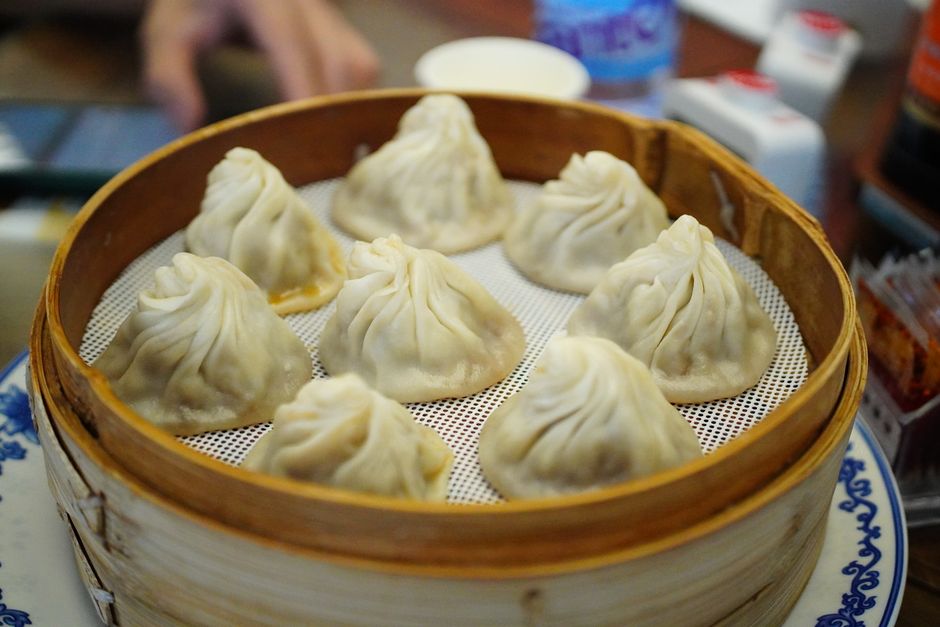
Huaiyang cuisine (from the region around Shanghai and the Yangtze Delta) is regarded by many Chinese as the country's most refined cooking. Flavours lean sweet rather than spicy, and seafood is central given the coastal location. The dishes most visitors remember are xiaolongbao (small soup-filled dumplings), red-braised pork belly slow-cooked until it melts, and sweet and sour mandarin fish.
Sichuan cuisine (四川菜, from the inland west) has won a large following internationally for its distinctive málà seasoning — a combination of dried chilli heat and the mouth-numbing tingle of Sichuan peppercorns. Kung Pao chicken, mapo tofu (silken tofu in a fiery sauce with minced pork), twice-cooked pork and dandan noodles are among its best-known dishes. If you are sensitive to spice, it is worth flagging this clearly when ordering.
Northeastern cuisine (东北菜) reflects the region's long, severe winters and its proximity to Mongolia and Russia. Portions are generous, dishes are hearty, and you will find things like potato dumplings and a Chinese adaptation of borscht that arrived via the Russian community in Harbin. It is the most meat-forward of the major styles.
Other regional styles worth knowing
Beyond those four, China has a broad range of other distinct traditions. Hunan cooking shares Sichuan's love of chilli but without the numbing peppercorn effect, making it arguably the spicier of the two. Shandong cuisine, from the northern coast, is known for its use of vinegar and its emphasis on seafood and wheat-based dishes such as hand-pulled noodles. Fujian cooking is delicate and often uses clear broths. Zhejiang dishes are subtle and lightly seasoned.
Ethnic minority cuisines add further variety. Uyghur food — found in dedicated restaurants across most cities — centres on lamb, hand-pulled noodles, flatbread (called naan) and lamb kebabs, with flavours closer to Central Asian cooking than to anything in the Han Chinese tradition. Tibetan food, Mongolian hotpot and the many cuisines of Yunnan province (which borders Southeast Asia) are each quite different again. Travellers spending several weeks in China will move through what amounts to a series of completely separate food cultures.
At the table: customs to be aware of
Meals in China are almost always shared. Dishes arrive at the centre of the table rather than as individual plates, and everyone helps themselves. At larger tables there is usually a rotating tray (a lazy Susan) to bring distant dishes within reach. It is polite to wait until the most senior person at the table begins eating before you start.
Chopsticks (筷子, kuàizi) are standard for most meals, with a spoon added for soups and porridge. A few customs around chopsticks matter enough to note:
- Do not stand chopsticks upright in a bowl of food — this resembles a funeral ritual.
- Do not pass food from your chopsticks directly to another person's chopsticks, for the same reason.
- Do not point at people with chopsticks, and avoid pointing them at anyone even when setting them down.
- Picking up your rice bowl and using chopsticks to push the last of the rice into your mouth is perfectly normal.
Plates are often small and used mainly to hold food you have transferred from a shared dish. Small bones can be left on your plate or bowl rather than removed by hand. Freshly cooked food — including street food cooked to order over very high heat — is generally considered safe; use the same judgement you would anywhere about food that has been sitting out in warm conditions.
Tea, street food and everyday eating
Tea (茶, chá) is served throughout the day, often at no charge in traditional restaurants, and arrives before food rather than with it. Green teas are common in the south; stronger oolong and pu-erh teas are typical in other regions. Asking for tea is always a reasonable thing to do.
Street food is widespread and inexpensive. Rice porridge (congee) is a common breakfast. Fried rice is a quick and satisfying meal at any time of day, made to order and usually very affordable. Convenience stores in cities stock filled buns and ready-made meals that can be heated in-store.
Managing dietary requirements
Halal food is accessible in most cities. Look for restaurants advertising Lanzhou-style hand-pulled noodles or Uyghur food stalls — signs may carry the Arabic حلال or the Chinese 清真 (qīngzhēn). Kosher food is rarely available outside major cities; contacting Chabad houses in advance is the most reliable approach.
Vegetarians will find the situation manageable but requires attention. Buddhist vegetarian restaurants, identifiable by the character 素 (sù), are found near major temples and offer the most reliable options. Elsewhere, dishes that appear vegetarian — tofu and vegetable stir-fries, for example — often contain oyster sauce, dried shrimp or minced pork as background flavourings. Being specific about requirements, ideally in written Chinese, helps considerably. Much of traditional Chinese vegetarian cooking does not use dairy or eggs, so it often suits vegans as well, though it pays to check desserts separately.
Entry and visa requirements for New Zealand passport holders change over time and should be confirmed with official sources or the Chinese embassy before travel.