Why Xi'an matters: ancient capital and modern city
One of China's oldest cities and former capital for 13 dynasties, Xi'an blends profound history with contemporary life. The Terracotta Warriors alone make it essential for first-time visitors.
Worldway Travel · 28 October 2026
A city that shaped China
Xi'an, known as Chang'an in ancient times, is one of humanity's oldest continuously inhabited cities. For over 1,000 years, it served as the capital for 13 Chinese dynasties, and more than 70 emperors ruled from here. The sheer weight of this history—spanning from the 11th century BC onwards—makes Xi'an fundamentally different from China's newer cities. Walking through Xi'an means standing on ground that has witnessed the rise and fall of empires, and that sense of deep time shapes everything about the place.
The city's importance extended far beyond its own borders. During the Han Dynasty, around 2,000 years ago, Xi'an was the starting point of the Silk Road, the vast network of trade routes that connected China with Europe, Central Asia and beyond for over a thousand years. Goods, ideas, religions and technologies flowed through this city, making it a crossroads of civilisation long before the modern world thought of itself as interconnected.
What brings people here
The Terracotta Army is the headline attraction, and justifiably so. Created to guard Emperor Qin Shi Huang in the afterlife around 2,200 years ago, thousands of life-sized clay soldiers stand in formation in underground pits outside the city. Each figure is individually detailed and distinct. Seeing them in person—the scale, the precision, the sheer number of them—is an experience that photographs cannot convey.
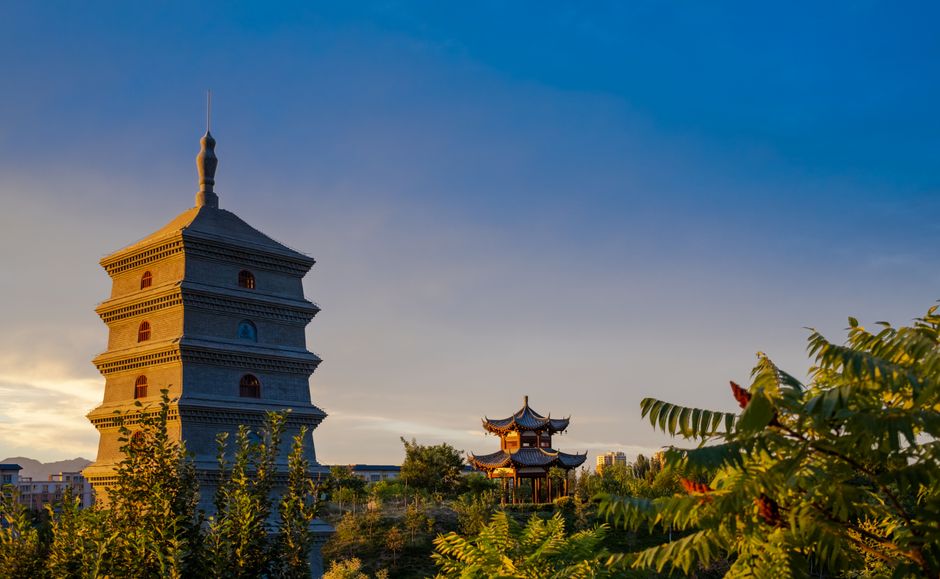
Beyond the Terracotta Warriors, Xi'an holds other significant sites. The city wall, rebuilt during the Ming Dynasty and still largely intact, is one of the finest surviving examples in China. Walking or cycling along its top offers views over the old city and a tangible connection to centuries of urban life. The Giant Wild Goose Pagoda, built in the 7th century during the Tang Dynasty, stands as a landmark and symbol of the city's Buddhist heritage. The History Museum houses extensive collections of artifacts from different periods, providing essential context for understanding the layers of civilisation beneath the modern city.
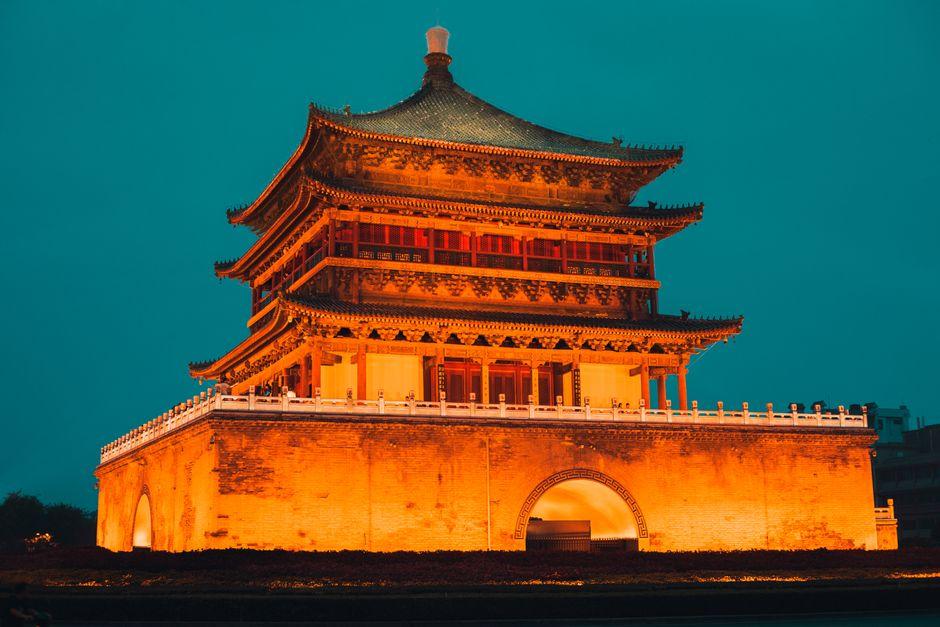
The Bell and Drum Towers, ornate structures from the Ming era, dominate the city centre and light up impressively in the evening. Cultural performances in traditional settings like Furong Garden offer glimpses of how life unfolded during Xi'an's peak centuries, though these need to be checked for current availability.
The modern side
Xi'an is not frozen in history. The city has developed modern amenities, shopping districts and contemporary restaurants while maintaining its historic character. This coexistence of ancient and modern can feel jarring at first—high-rise hotels and shopping malls rising beside temples and old city gates—but it reflects how China has developed. For many visitors, this blend of old and new is part of what makes Xi'an interesting: it is not a museum piece but a living city that happens to have extraordinary depth.
The city has a more relaxed atmosphere than China's mega-cities like Beijing or Shanghai, though it is still substantial in size with several million residents.
Seasons and timing
Xi'an experiences four distinct seasons. Spring (March to May) and autumn (September to November) offer the most pleasant weather for sightseeing, with mild temperatures and lower humidity. Summer can be hot and dry, while winters are cold though generally not severe. Many New Zealand visitors find autumn particularly appealing.
The journey from Auckland to Xi'an typically involves at least one stopover and takes around 20 hours of flying time. Most travellers base themselves in the city for several days to see the main sites without feeling rushed.

Who suits Xi'an
First-time visitors to China often find Xi'an essential because the Terracotta Army is so significant and the city's role in Chinese history so fundamental. History enthusiasts will find endless depth here. Visitors interested in archaeology, ancient culture and the Silk Road will find Xi'an rewarding. Those seeking to understand China's roots rather than just see modern skyscrapers will appreciate what the city represents.
The walking required to see major sites is moderate but real—the city wall and pagodas involve climbing or extended exploration on foot. Guided tours with English-speaking guides are widely available and help make sense of the historical context, which can otherwise feel overwhelming given how much history is concentrated here.