Yangshuo: small-town scenery and outdoor adventure in southern China
A compact town surrounded by dramatic limestone mountains, Yangshuo offers rock climbing, cycling and river views without the intensity of China's major cities.
Worldway Travel · 30 October 2026
What makes Yangshuo different
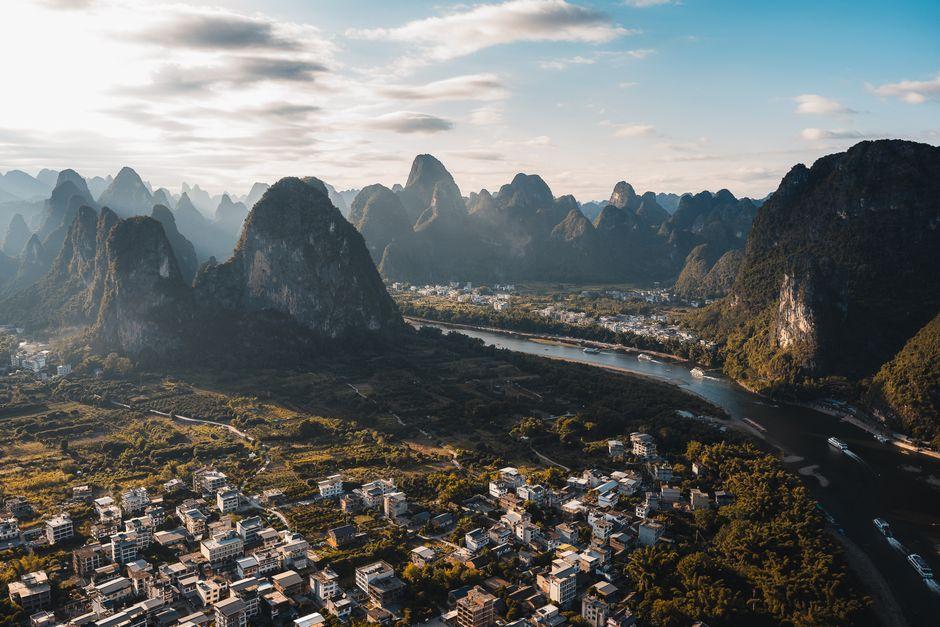
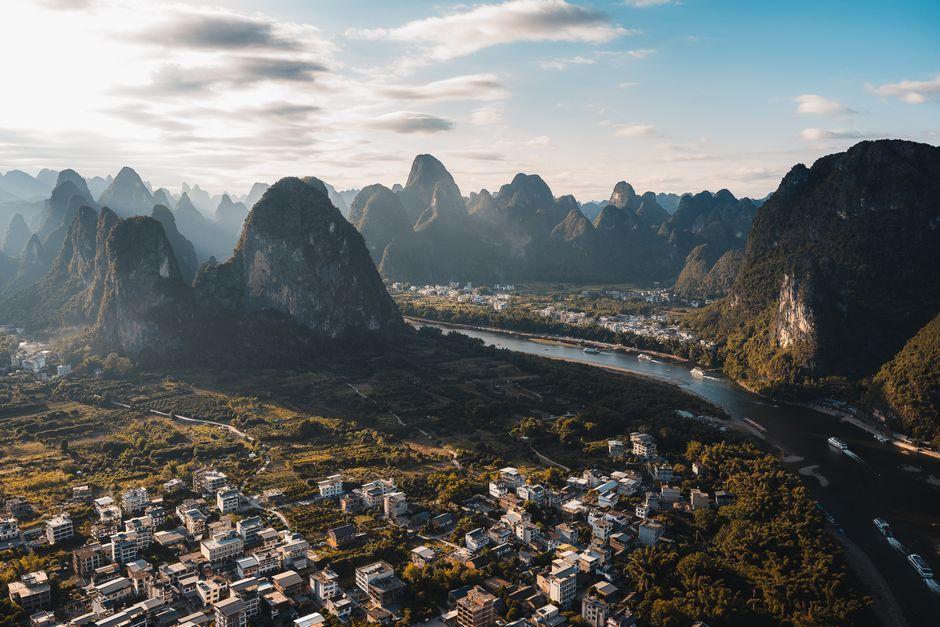
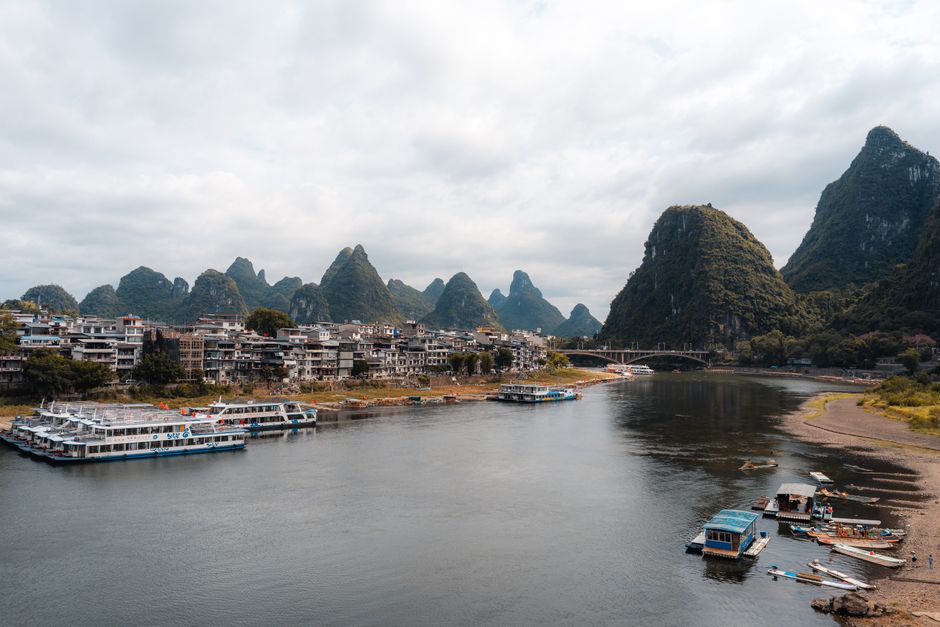
Yangshuo sits in a valley of extraordinary karst mountains in Guangxi Province, about 90 minutes from Guilin. It is not like other Chinese towns. Instead of sprawl, traffic chaos and grey apartment blocks, it feels more like a holiday village—manageable in size, relatively quiet and clean, with tree-lined streets where locals cycle rather than rush. The surrounding countryside remains strikingly beautiful: limestone peaks, bamboo groves, caves and temples rise from rice fields and rivers. For travellers who find major Chinese cities overwhelming, Yangshuo offers a gentler introduction to the country.
That said, it has changed markedly since the 1980s when backpackers first discovered it. Yangshuo now attracts large numbers of Chinese tour groups and domestic tourists. The foreign community that once shaped its character has largely moved on. You will find restaurants catering to visitors and English speakers in the tourist streets, but this is now primarily a Chinese holiday destination, not an international enclave.
The lay of the town
The main tourist area is small and easy to navigate. Two parallel streets—West Street (the older, more established centre) and Diecuilu—run uphill from the river, connected by smaller cross streets in a ladder-like pattern. Between them flows a creek with some of the town's most pleasant bars and restaurants perched on balconies overlooking it. At street level you will find Chinese restaurants, shops, cafes and hotels; at the river end are vendors selling souvenirs and several riverside hotels. The top of this grid is marked by Pantao Road, a busier street lined with more hotels. The bus station sits at the junction of Pantao Road and Diecuilu. This entire area can be walked in under 20 minutes, so there is no need to worry about getting lost.
Main sights and experiences
The dramatic landscape is the primary reason to visit. Most people explore it by renting a bicycle or electric scooter and pedalling into the countryside to see the mountains, rice paddies, water buffalo and small villages. It is a relaxed way to spend a day and manageable even for those who do not cycle often at home.
Yangshuo is internationally known for rock climbing. The karst formations offer thousands of routes, from beginner to expert level, and climbing guides and schools operate throughout the area. Climbers and mountaineers come specifically for this, but casual visitors can also book a lesson or a guided climb if the sport interests them.
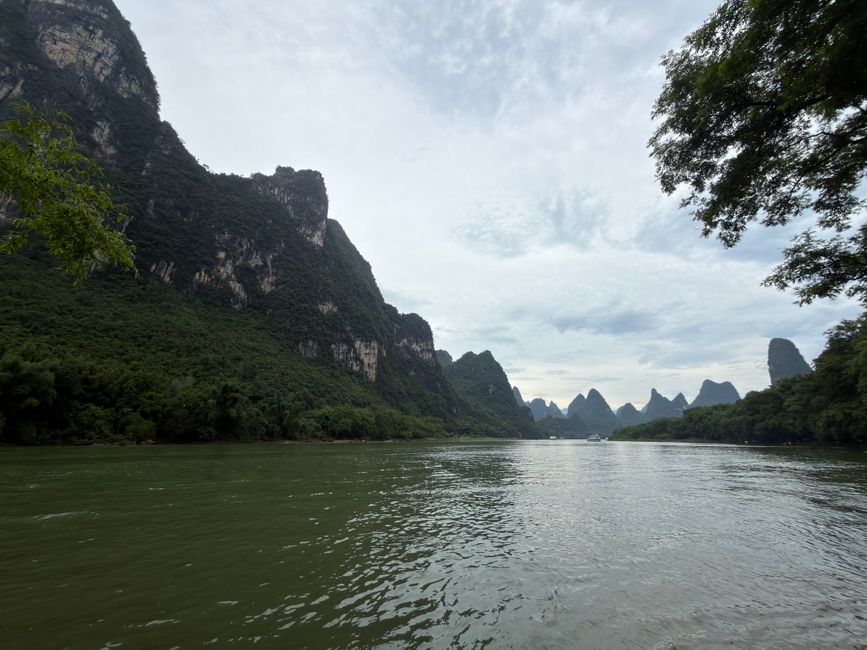
The Li River is central to the landscape. Scenic boat tours run from Yangshuo downstream and also from Guilin, and some people kayak or bamboo-raft sections of the river. Cave exploration and visits to Buddhist temples are also available in the surrounding area.
For many people, Yangshuo itself is the experience—sitting at a café with a view of the mountains, exploring the quiet streets, eating well, and moving at a slower pace than they would in a larger city.
Who Yangshuo suits
Yangshuo suits travellers who want to see beautiful scenery and experience rural southern China without the pressure of a structured itinerary. Rock climbers and cycling enthusiasts have obvious reasons to go. Older travellers and those visiting China for the first time often enjoy it because the town is small, relatively easy to navigate, and not as intense as Beijing or Shanghai.
People who dislike crowds and want authentic local atmosphere may find the volume of organised tours and Chinese visitors frustrating. Those seeking to avoid other tourists or to experience "undiscovered" China will probably be disappointed. Yangshuo is well known and well visited, and that is increasingly visible.
Getting there and practicalities
Yangshuo has no airport or train station of its own. Guilin Liangjiang International Airport, about 90 minutes away, is the main entry point. Several Asian carriers operate flights there from major Chinese cities and from regional hubs like Kuala Lumpur. From Guilin airport, an airport shuttle bus runs directly to Yangshuo's northern bus station, taking about 90 minutes. A taxi is faster but more costly and best arranged through your hotel to avoid overcharging by drivers waiting at the airport.
Guilin railway station also connects to Yangshuo by minibus (roughly 80–90 minutes), though buses from the station can be slow and unreliable. The main bus terminal in front of Guilin station is safer than informal bus touts outside.
The town's compact size means most accommodation, food and activities are within walking distance. West Street and the streets around it are where most visitors spend their time. Spring (March to May) and autumn (September to November) offer the best weather—warm but not intensely hot or humid. Summer brings heat and rain; winter is cool and sometimes misty, but still manageable. The climate is opposite to New Zealand's: when Auckland is heading into winter, Yangshuo is warming up for spring.
Entry and visa requirements for New Zealand passport holders change periodically and must be checked with Chinese diplomatic services or an official visa agency before booking travel.